Struggling With Work Stress? 7 Signs You Need Therapy (Not Just a Vacation)
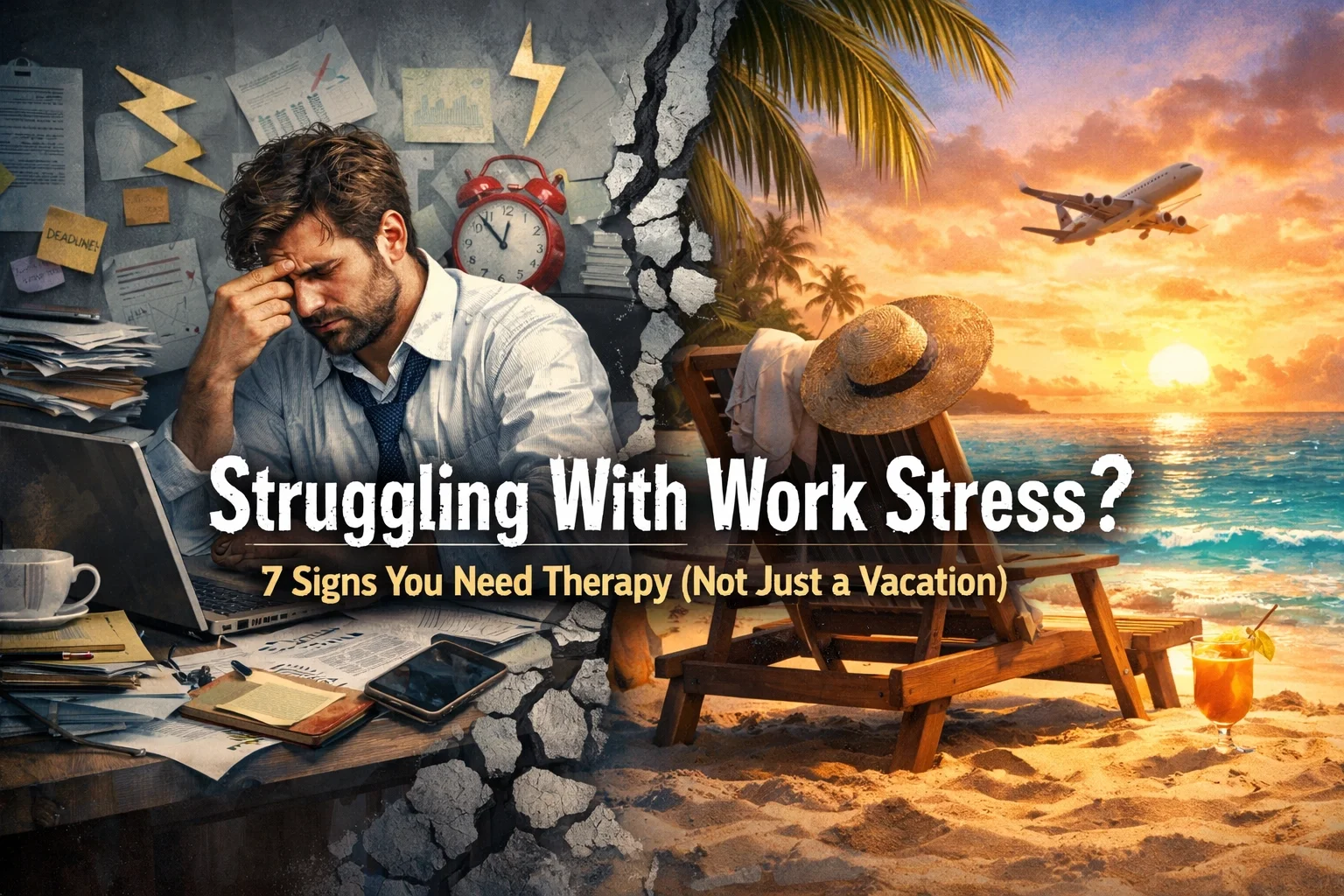
We've all been there. You're dragging yourself to work, counting down the days until your next PTO, convinced that a long weekend or beach trip will fix everything. And sure, vacations help. But what happens when you come back and nothing's actually changed? When the same knot in your stomach reappears the moment you open your laptop?
Here's the thing: not all work stress is created equal. Sometimes it's situational: a tough project deadline or a busy season that'll pass. But other times? It's something deeper that rest alone can't touch.
If you're wondering whether your work stress has crossed the line from "I need a break" to "I need actual support," these seven signs will help you figure it out.
1. You're Exhausted No Matter How Much You Rest
This isn't about being tired after a long day. We're talking about bone-deep exhaustion that doesn't budge: even after a full night's sleep, a relaxing weekend, or that vacation you just took.
You wake up feeling like you never went to bed. Your body feels heavy. The idea of getting through another workday feels impossible, even when your schedule isn't objectively overwhelming.

This kind of chronic fatigue is one of the hallmark signs of burnout, and it's your body waving a red flag. When rest stops working, it's time to look deeper at what's driving the depletion: and therapy can help you get there.
2. Your Sleep Is a Mess
Maybe you can't fall asleep because your mind won't stop replaying work conversations. Or you wake up at 3 a.m. in a panic about tomorrow's meeting. Or you sleep through the night but wake up feeling like you didn't sleep at all.
When work stress starts messing with your sleep on a regular basis: not just before a big presentation, but night after night: it's a sign that your nervous system is stuck in overdrive.
Sleep problems caused by chronic stress don't usually resolve on their own. They need targeted intervention, whether that's learning how to calm your mind before bed, processing the underlying anxiety, or building better boundaries around work.
3. Your Body Is Sending You Signals You Can't Ignore
Headaches that won't quit. Tight shoulders and neck pain. Stomach issues that flare up before work. Heart palpitations when you check your email. Jaw clenching that your dentist noticed.
When stress becomes chronic, it doesn't just live in your head: it shows up in your body. And unlike temporary tension that eases when the stressor passes, these physical symptoms stick around because the stress never fully goes away.

Your body is trying to tell you something. If you've ruled out medical causes and the symptoms keep coming back, work stress is likely the culprit. Therapy helps you connect the dots between what's happening at work and how your body is responding.
4. You Can't Focus or Make Decisions Like You Used To
Remember when you could knock out tasks efficiently? When decisions came easily? When your brain felt sharp?
Now? Everything feels foggy. You read the same email three times and still don't absorb it. Simple decisions feel overwhelming. You're making mistakes you wouldn't normally make. Your performance is slipping, and you know it.
This cognitive fog isn't laziness or lack of intelligence. It's what happens when your brain is maxed out from managing stress. When your mental energy is constantly spent on worry, anxiety, or just getting through the day, there's not much left for focus and problem-solving.
Therapy can help you clear the fog by addressing what's consuming your mental bandwidth in the first place.
5. Your Emotions Are All Over the Place
You snap at your partner over something small. You feel like crying in the bathroom at work. You're numb when you used to care deeply. You go from fine to furious in seconds.
Emotional dysregulation is a big sign that work stress has tipped into something more serious. When you can't control your reactions the way you normally would: or when you're feeling nothing at all when you know you should feel something: it's time to get support.

This kind of emotional exhaustion doesn't mean you're weak or broken. It means you're human, and you've been carrying too much for too long without adequate support.
6. You're Avoiding Work (and People) More Than Usual
You used to be reliable. Now you're procrastinating on tasks that trigger anxiety. You're dodging meetings. You're calling in sick more often. You're avoiding conversations with certain coworkers or your boss.
Outside of work, you're pulling back too. Canceling plans. Not answering texts. Isolating yourself because you just don't have the energy to show up.
Maybe you've even noticed yourself reaching for unhealthy coping mechanisms: drinking more than usual, stress eating, scrolling endlessly, anything to numb out.
These avoidance patterns are protective behaviors. Your brain is trying to shield you from more stress. But they also create more problems in the long run. Therapy gives you healthier tools to cope and helps you understand what you're really trying to avoid.
7. Nothing Feels Good Anymore: Even Outside of Work
This one's the hardest to spot because it happens gradually. You used to love your hobbies. Now they feel like chores. You used to enjoy time with friends. Now you're just going through the motions.
Even on days off, you can't fully relax or have fun because work thoughts keep creeping in. You feel stuck, unmotivated, and like you're just surviving instead of living.
When work stress bleeds into every corner of your life and steals your ability to find joy, it's gone beyond "I need a vacation." It's affected your overall mental health and well-being.
This is when therapy becomes essential: not optional. You deserve to feel alive again, not just at work but in your whole life.

You Don't Have to Wait for Rock Bottom
Here's what a lot of people don't realize: you don't need to be in crisis to benefit from therapy. You don't have to wait until you're completely falling apart or until your work stress leads to a breakdown.
If you're reading this list and recognizing yourself in multiple signs, that's enough. If work stress is affecting your sleep, your relationships, your health, or your happiness: that's enough.
Therapy approaches like Cognitive Behavioral Therapy (CBT) and Acceptance and Commitment Therapy (ACT) are proven to help with work-related stress. They can help you identify the thought patterns keeping you stuck, develop practical coping strategies, and build the skills to set boundaries and manage stress more effectively.
The right support can help you move from just surviving your workday to actually having a life you enjoy: both at work and outside of it.
Ready to Get Support?
If these signs sound familiar, you're not alone. Work stress is one of the most common reasons people reach out for therapy, and getting help is one of the smartest things you can do for your mental health and your future.
At In Your Corner Behavioral Health and Wellness, we specialize in helping people navigate stress, anxiety, trauma, and burnout. Whether you prefer telehealth therapy or in-person sessions, we're here to support you.
You've been carrying this weight long enough. Let's work on it together.