Medication Management: Why It's Not Just About a Pill (and How It Actually Works)
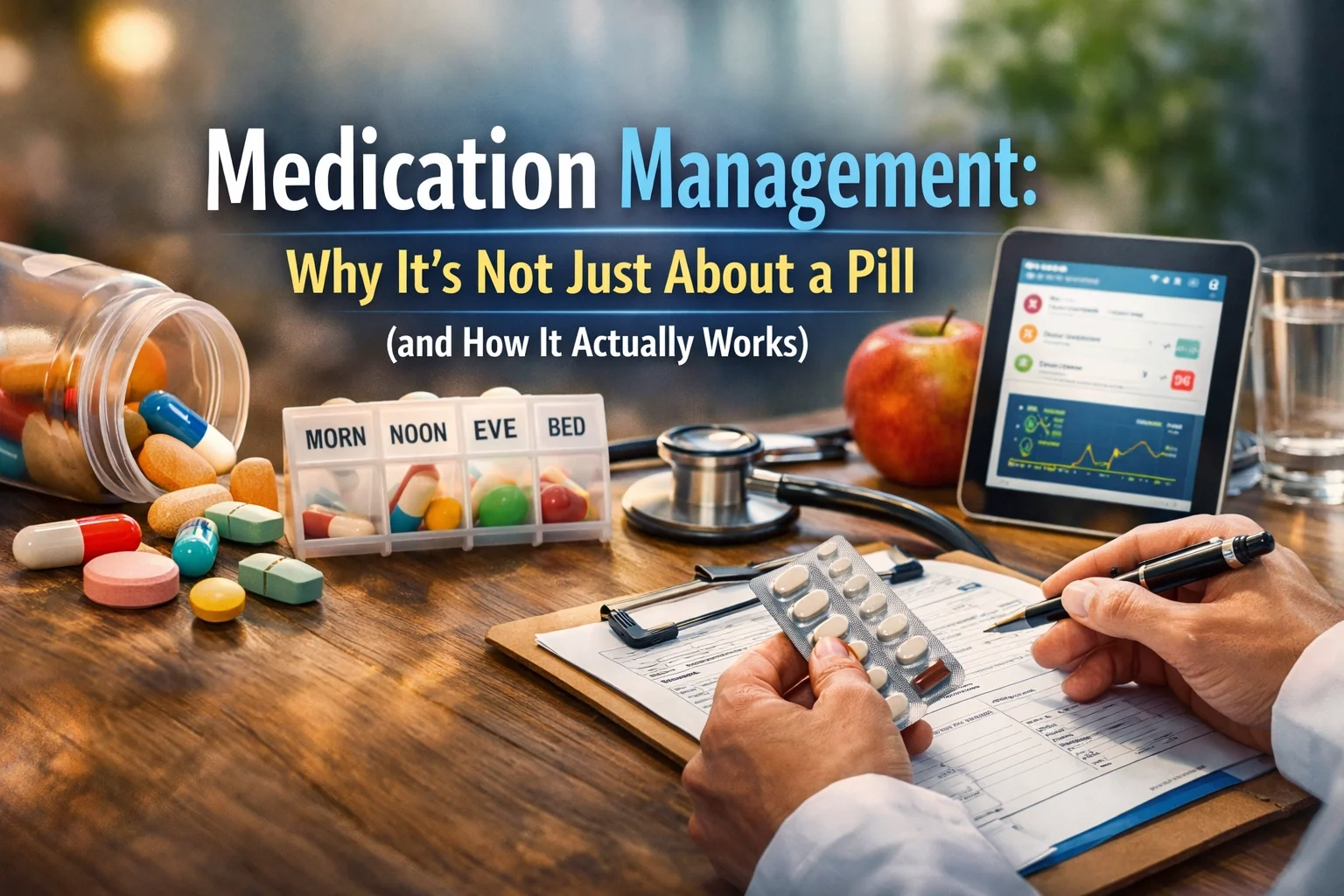
Let's clear something up right away: medication management is not just about getting a prescription and calling it a day. If you think it's as simple as "take this pill and see you in six months," you're not alone: but that's not how it actually works (or at least, not how it should work).
The truth? Medication management is a whole process. It's collaborative, it's ongoing, and when done right, it's one of the most effective tools for supporting your mental health journey. Let's break down what it really means and how it can help you feel more like yourself again.
What Is Medication Management, Really?
Think of medication management as a partnership between you and your healthcare provider. It starts with an honest conversation about what's going on: your symptoms, your history, what you've tried before, and what your goals are. From there, your provider evaluates whether psychiatric medication management might be a good fit for you.

But it doesn't stop at the prescription pad. Medication management includes:
Initial evaluation to understand your unique needs
Prescribing the right medication at the right dose for you (not a one-size-fits-all approach)
Ongoing monitoring to see how it's working and catch any side effects early
Regular check-ins to adjust dosages, try different options, or celebrate progress
Education so you understand what you're taking and why it matters
It's not just handing you a pill and wishing you luck. It's making sure that medication is working for you, safely and effectively.
Why "Just Taking a Pill" Isn't Enough
Here's the thing: your brain chemistry is complex. What works for one person might not work for another, and finding the right medication (and the right dose) often takes some trial and adjustment. That's completely normal.
Medication management ensures you're not navigating that process alone. Your provider is actively tracking how you're responding, watching for any red flags, and fine-tuning your treatment plan as you go. They're also making sure nothing you're taking: whether it's another prescription, an over-the-counter supplement, or herbal remedy: is interfering with your mental health medication.
This kind of careful, personalized attention is what separates true medication management from just "getting a refill."
When Therapy Alone Isn't Quite Cutting It
Therapy is incredible. It gives you tools, helps you process emotions, and builds healthier thought patterns. But sometimes, therapy alone isn't enough to get you where you need to be: and that's okay.

You might benefit from psychiatric medication management if:
You're struggling with persistent anxiety or depression that hasn't improved much with therapy alone
Sleep issues are seriously affecting your daily life, no matter what coping strategies you try
You're having trouble with focus, concentration, or brain fog that makes it hard to function
Intrusive thoughts or overwhelming emotions feel impossible to manage, even with your best efforts
You've been diagnosed with a condition like bipolar disorder, PTSD, or OCD that often responds well to medication
Physical symptoms like panic attacks or chronic tension aren't easing up
None of this means therapy "failed" or that you're not trying hard enough. Sometimes, your brain just needs a little extra biochemical support to help those therapeutic tools really stick.
How Medication Works With Therapy (Not Instead Of It)
Here's what a lot of people don't realize: medication and therapy are a team. They work best when they're working together.
Medication can help level out the neurochemical imbalances that make symptoms so overwhelming. When your brain chemistry is more balanced, therapy becomes more effective because you have the mental space and energy to actually use the skills you're learning.
Think of it this way: if anxiety has you in a constant state of fight-or-flight, it's really hard to practice mindfulness or challenge negative thoughts. But if medication takes the edge off that anxiety, suddenly you can engage with therapy in a meaningful way. You can sleep better, focus more clearly, and actually implement the coping strategies your therapist is teaching you.

It's not an either-or situation. It's both-and. And for many people, that combination is what finally helps them feel like they're moving forward.
The Collaborative Process: What to Expect
So what does medication management actually look like in practice? Let's walk through it.
Your first appointment is all about getting to know you. Your provider will ask about your symptoms, your medical history, any medications you're currently taking, and what you're hoping to achieve. This isn't a quick 10-minute chat: it's a real conversation.
From there, if medication seems like a good option, your provider will recommend a specific medication and explain why they think it's a good fit. They'll talk you through how it works, what to expect, potential side effects, and how long it typically takes to see results.
In the weeks that follow, you'll have regular check-ins. These might be weekly at first, then spread out as you stabilize. Your provider will ask how you're feeling, whether you're noticing any changes (good or bad), and if any adjustments need to be made.
This is the collaborative part. You're not just passively taking what you're given: you're an active participant. Your feedback matters. If something doesn't feel right, you speak up. If you're seeing improvements, you share that too. Together, you and your provider fine-tune your treatment until you find what works best for you.
How In Your Corner Supports You Through Medication Management
At In Your Corner Behavioral Health and Wellness, we know that starting medication can feel intimidating. Maybe you're worried about side effects, or you're not sure if it's the right move for you. That's completely understandable.

That's why our approach to psychiatric medication management is built on safety, expertise, and genuine partnership. We take the time to really understand your story and your goals. We explain things in plain language (no medical jargon that leaves you confused). And we're here for you every step of the way: checking in regularly, answering your questions, and adjusting your treatment as needed.
We also offer telehealth therapy, which means you can access medication management from the comfort of your own home. No need to fight traffic or take time off work. Just log in, have your appointment, and get back to your day.
Whether you're looking for therapy near me or exploring medication management for the first time, we're here to help you figure out what makes sense for your mental health journey.
Taking the Next Step
If you've been wondering whether medication might help, or if therapy alone hasn't been giving you the relief you're looking for, it might be time to have a conversation about your options.
Medication management isn't about masking symptoms or taking the "easy way out." It's about giving your brain the support it needs so you can do the work of healing and growing. It's about finding balance. And it's about having a trusted provider in your corner who's committed to helping you feel better.
Ready to explore your options? Book a consult with us today. Let's talk about what's going on, what you've tried, and whether psychiatric medication management might be a good fit for you. No pressure, no judgment: just honest, compassionate guidance.
You deserve to feel like yourself again. Let's figure out how to get you there.